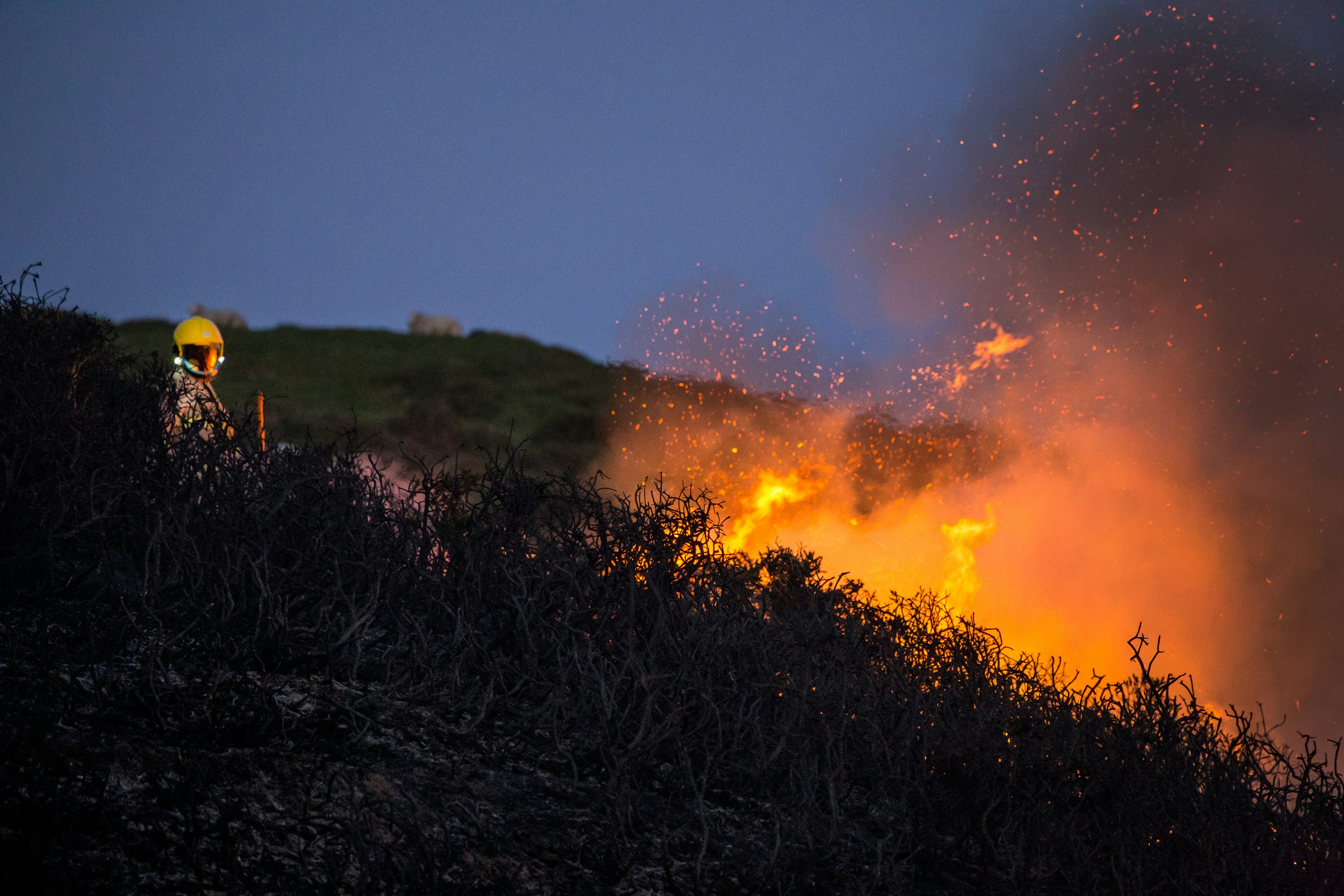
Why Wales is burning more than ever
This spring in Wales was less about blooming flowers and more about
burning fields. Wildfires, however, have long been part of the Welsh
landscape.
From pine trees to bracken ferns, fires have long shaped the land and ecosystems as we know them today. But this year's fires looked nothing like those of the past.
They were larger, faster and harder to control than anything seen in recent memory. What changed?
From pine trees to bracken ferns, fires have long shaped the land and ecosystems as we know them today. But this year's fires looked nothing like those of the past.
They were larger, faster and harder to control than anything seen in recent memory. What changed?
Wildfire season is starting earlier and lasting longer.
Wildfire season in Wales is now beginning earlier than expected, with
fires common in February and March rather than late spring or summer.
Joe McNorton, a fire scientist at the European Centre for Medium-Range Weather Forecasts, explains that the season is extending on both ends. Hot and dry conditions are lasting long after plants would normally become green and resistant to burning.
Scientists describe hot, dry, and windy periods as 'high fire weather.' On such days, fires spread rapidly across the landscape. And they expect more of these days in the future.
But McNorton points out that dangerous weather doesn’t automatically lead to more fires. If vegetation has already burned earlier in the year, there may be little fuel left to ignite
Spring fires themselves are not unusual in Wales. Traditionally, controlled burns cleared dead grass, making way for new shoots for livestock to graze on. The spring showers would help to put them out.
What made this year different was the weather. Last year's heavy rains left behind thick growth of vegetation. Then, according to the Met Office, 2025 brought the warmest and driest spring on record. With heat, dry winds, and no rain, that extra vegetation turned into fuel.
All it took was a single spark to set large areas ablaze.
Joe McNorton, a fire scientist at the European Centre for Medium-Range Weather Forecasts, explains that the season is extending on both ends. Hot and dry conditions are lasting long after plants would normally become green and resistant to burning.
Scientists describe hot, dry, and windy periods as 'high fire weather.' On such days, fires spread rapidly across the landscape. And they expect more of these days in the future.
But McNorton points out that dangerous weather doesn’t automatically lead to more fires. If vegetation has already burned earlier in the year, there may be little fuel left to ignite
Spring fires themselves are not unusual in Wales. Traditionally, controlled burns cleared dead grass, making way for new shoots for livestock to graze on. The spring showers would help to put them out.
What made this year different was the weather. Last year's heavy rains left behind thick growth of vegetation. Then, according to the Met Office, 2025 brought the warmest and driest spring on record. With heat, dry winds, and no rain, that extra vegetation turned into fuel.
All it took was a single spark to set large areas ablaze.
Grassland, Woodland and Crop fires per month (2020 - 2025)
As of 1 July 2025. Fires counted in the chart are both accidental and
deliberate.
Source: North Wales, South Wales, and Mid and West Wales Fire and
Rescue Services (StatsWales)
Burnt area isn't the full story.
Globally, the total land burned by wildfires is actually going down. At
first glance, this might sound like good news. But scientists warn it
gives a misleading picture.
Douglas Kelley, wildfire scientist at the UK Centre for Ecology and Hydrology, says that while overall burnt area is shrinking, the size and intensity of the largest fires are increasing.
"We're seeing fewer small burns but more extreme events," he says.
Gareth Clay, professor of geography at the University of Manchester, adds that burnt area alone misses the full story. A small fire may not cover much ground, but it can still close roads, choke valleys with smoke, or threaten homes. These local impacts don't always show up in national statistics.
Douglas Kelley, wildfire scientist at the UK Centre for Ecology and Hydrology, says that while overall burnt area is shrinking, the size and intensity of the largest fires are increasing.
"We're seeing fewer small burns but more extreme events," he says.
Gareth Clay, professor of geography at the University of Manchester, adds that burnt area alone misses the full story. A small fire may not cover much ground, but it can still close roads, choke valleys with smoke, or threaten homes. These local impacts don't always show up in national statistics.
Burnt Area in the United Kingdom (2015 - 2025)
Note: As of 1 July 2025. EFFIS only maps fires that are approximately
30ha or larger.
Source: European Forest Fire Information System (EFFIS)
Experts also stress that fire behaviour depends on the land’s history.
Several years of plant growth may build up enough fuel for an intense blaze, while human actions such as land management or suppression efforts can change how fires spread. Clay says this is why weather patterns and burnt area don’t always match.
These patterns of fire and fuel are tied to wider changes in weather. And in Wales, those changes are coming in sharp swings.
Scientists are paying close attention to swings in weather from one year to the next. They call this "climate whiplash".
Several years of plant growth may build up enough fuel for an intense blaze, while human actions such as land management or suppression efforts can change how fires spread. Clay says this is why weather patterns and burnt area don’t always match.
These patterns of fire and fuel are tied to wider changes in weather. And in Wales, those changes are coming in sharp swings.
Scientists are paying close attention to swings in weather from one year to the next. They call this "climate whiplash".